
Introduction to the Middle Ages
The Middle Ages, also known as the Medieval Period, spans approximately from the 5th to the late 15th century. This era is typically divided into three distinct phases: the Early Middle Ages, the High Middle Ages, and the Late Middle Ages.
Early Middle Ages (c. 500–1000)
The Early Middle Ages began after the fall of the Western Roman Empire. During this time, Europe underwent significant social and political changes. Feudalism emerged as a dominant social system, where land ownership and agricultural production shaped society. The spread of Christianity played a crucial role in uniting various groups and influencing cultural developments.
High Middle Ages (c. 1000–1300)
The High Middle Ages was characterized by a revival of trade, increased agricultural production, and the growth of towns and universities. This period saw the rise of powerful monarchies and the establishment of centralized states. Gothic architecture and notable works such as cathedrals flourished. Scholasticism emerged, blending faith and reason, significantly impacting education and philosophy.
Late Middle Ages (c. 1300–1500)
The Late Middle Ages experienced turmoil and transformation, marked by events such as the Black Death, the Hundred Years’ War, and religious upheavals. Despite these challenges, significant advancements in art and literature led to the Renaissance’s emergence at the close of this period. This era is recognized for its contributions to culture, politics, and thought, setting the stage for modern European history.
In summary, the Middle Ages were a formative period in history that laid the groundwork for contemporary society, influencing various aspects of Western culture and governance.
It’s throw down night at the Round Table Lounge

It’s a challenge between Princess Bride and the cast of characters of the movie Merlin. In other words, Camelot vs. Florin. Here’s how I picture it going down. I hope someone designs a Tavern Song Book of all the Karaoke that’s going on tonight. All future song writers can add to the drama by writing a verse or two. Below is the group from Camelot;
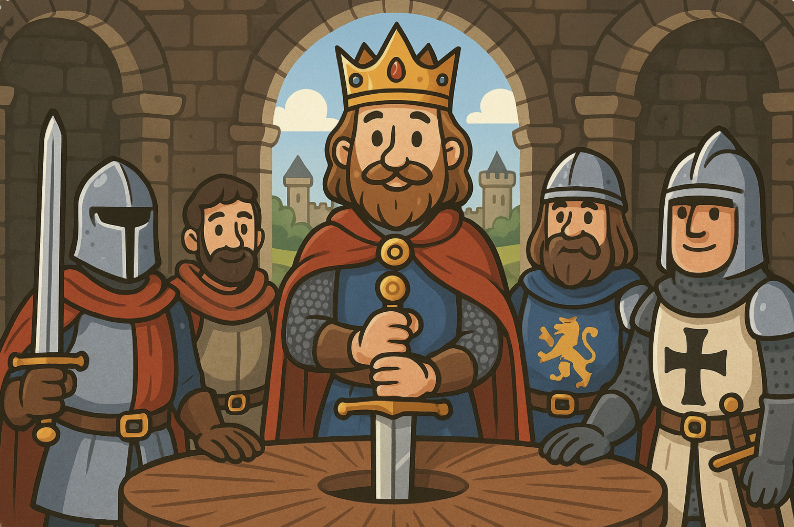
🎤 Sir Lancelot:
Belts out a soulful power ballad titled “Guinevere, My Golden Flame”—all passion, brooding looks, and falsetto. Everyone knows he’s singing about Arthur’s queen, but nobody dares say a word.
🎤 King Arthur:
Goes classic with “Sword in the Stone Blues”, a jazzy tale of destiny, swords, and slightly passive-aggressive verses about Merlin never explaining anything properly.
🎤 Sir Gawain:
Pulls out a crowd-pleaser: “Green Knight Rhapsody”. It’s weird, dramatic, and involves shouting, but it always gets a standing ovation.
🎤 Merlin (if he shows up):
Performs a haunting, echo-laden cover of “Lady of the Lake”, complete with smoke, lighting effects, and suspiciously accurate visions of the future in the lyrics.
🎤 Morgana:
Slinks up for a dark pop number called “Camelot’s Curse”, complete with magical backup dancers conjured from smoke.
🎤 Sir Galahad:
Only sings songs about quests and purity, like “Holy Grail (My One True Love)”. No one really vibes with it, but he sings like an angel.
🎤 Sir Kay:
Always does rowdy drinking songs. Think “Ale Before Honor” or “Raise Your Tankard High”. Gets everyone clapping.
The Merlin group of singers performs from a time closer to the fall of the Roman Empire, which may not be as appealing as the music from the Florin group about to perform. they are closer to the discovery of America. Let’s hear their songs! Ohhh yes—It looks like the Princess Bride group. They truly have a whole different vibe. Picture candlelit booths, pirate flags, and a jukebox that only plays songs about true wuv. Here’s who’s grabbing the mic there:

🎤 Westley (a.k.a. The Dread Pirate Roberts):
Sings “As You Wish”—a slow, romantic acoustic ballad that’s basically just those three words sung in different emotional tones. The entire tavern sways along.
🎤 Buttercup:
Slays with a melancholic love song titled “Farm Boy, Come Back to Me”. Everyone cries. Even Inigo.
🎤 Inigo Montoya:
Hits the crowd with an intense flamenco-style track called “You Killed My Father”. He dedicates it to the crowd with an intense flamenco-style track called “You Killed My Father”. He dedicates it to Count Rugen every. single. time.
And then finishes with a softer encore: “To the Pain (But Make It a Duet)”. Count Rugen every. single. time.
🎤 Fezzik:
Raps. Yes, raps. A wholesome, hype number titled “Anybody Want a Peanut?”. Everyone claps along. He ends every verse with a rhyme about friendship.
🎤 Vizzini:
Attempts a speed-singing number filled with philosophical paradoxes and logic puzzles called “Inconceivable!”. No one knows what he’s saying but it’s oddly catchy.
🎤 Miracle Max & Valerie:
Duet alert! They crush a vaudeville-style banger called “Mostly Dead”, complete with prop potions and sass. The audience loves them. Always a standing ovation.
🎸 Stage Setup:
Wrapping up the night , Inigo plays a dramatic Spanish guitar version of the chords. Fezzik keeps time by gently tapping a barrel like a drum. Miracle Max accidentally triggers a smoke bomb at the perfect moment, adding rockstar flair.
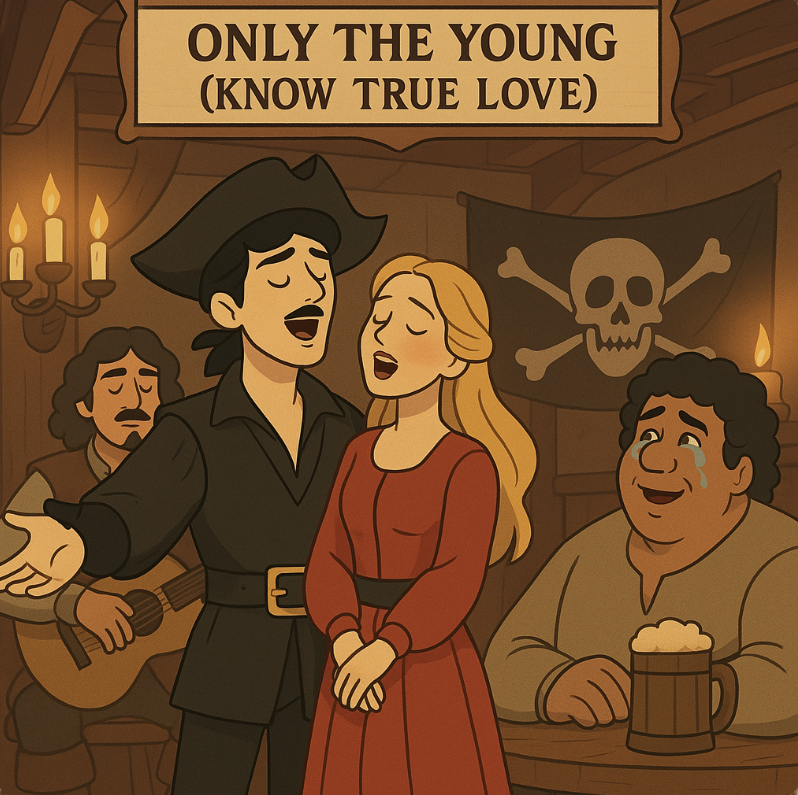
🎤 Westley & Buttercup (duet) – Only the Young (Know True Love) It starts with Buttercup alone under soft candlelight, singing the first verse with a dreamy look toward the sea. ” Another night in any town.”
Then Westley enters, pirate coat flowing, joining her in harmony just in time for the chorus.
“Only the young can say… they’re free to fly away…”
The whole tavern goes silent except for Fezzik quietly weeping into his ale. Even Vizzini wipes away a single tear (and then pretends it’s just allergies). Click the picture below for that clip featured in the movie “Vision Quest” 1985.
Spin the Wheel – Merlin Characters Game
Clue
Click Spin to get a clue
 Far Side of History